Arrearages negatively impact utilities and their customers
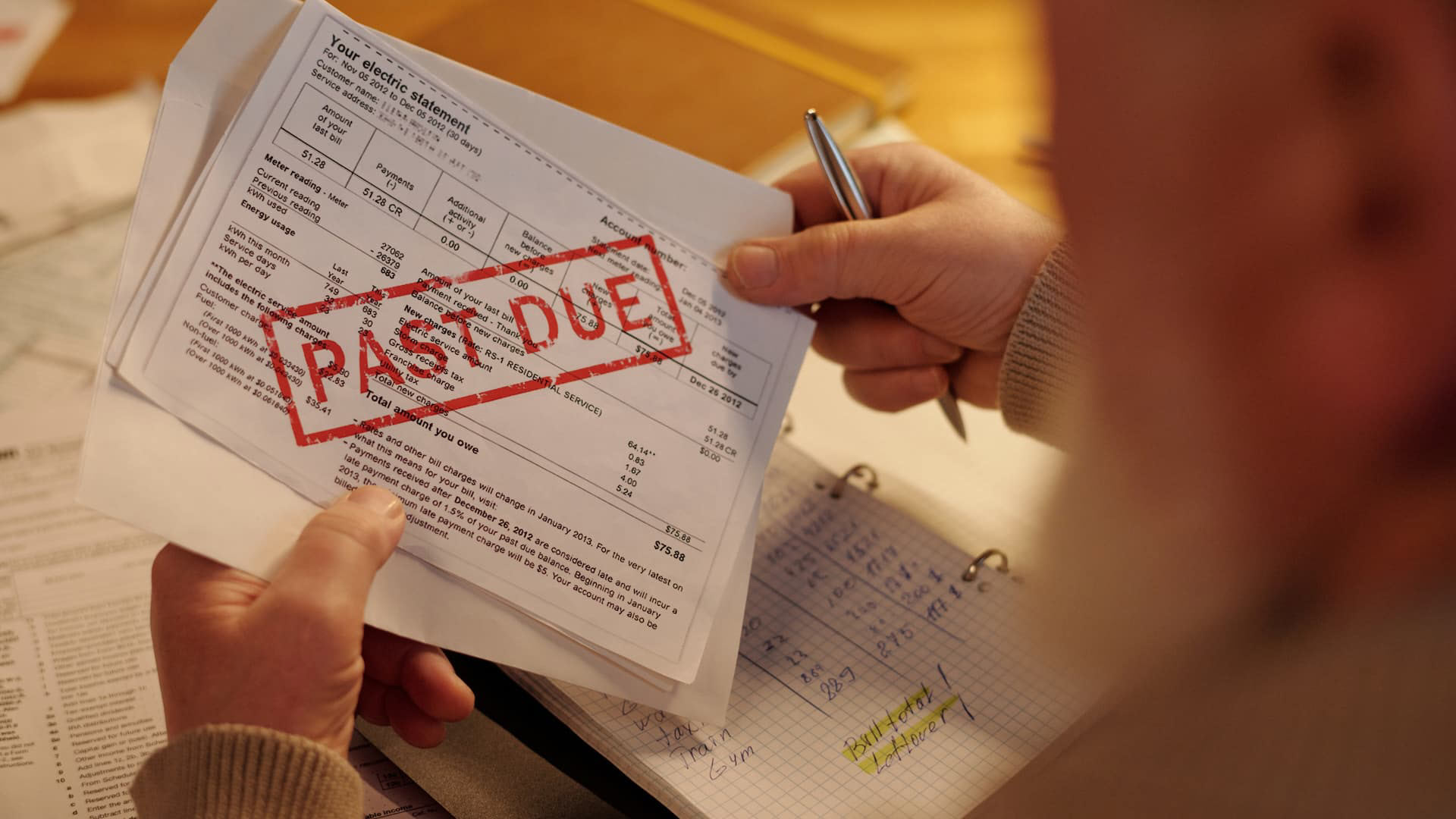
Utilities are facing rising customer debt, widening assistance gaps, and higher bad debt ratios. This report explains how these conditions are affecting utilities and their customers. It also shows where utilities stand with arrearages based on specific attributes like utility type and size. Utilities can use this information to understand their relative position and build a strategy for improvement.
This report presents a high-level overview of the survey data. Future reports will include more detailed information about the results, including:
- Which customer groups represent the highest proportion of arrearages
- What programs are most helpful
- The types and frequency of notifications utilities send to customers when they get behind on their payments
About the survey
E Source works with more than 150 utilities, many of which are concerned about rising customer debt. To support these utilities, we conducted our first Arrearage benchmark survey in late 2025 with 35 participating utilities. Respondents included a mix of investor-owned and municipal utilities in the US and Canada that provide electric and dual-fuel service.
The survey gives access to key arrears metrics that utilities can use to compare their performance with peers. Reviewing arrears counts, dollar amounts, and recovery rates helps utilities understand their financial exposure and plan strategies to reduce risks from customer debt.
Arrears are having a negative effect on utility business
Arrearages present problems for both customers and utilities. Utilities may face scrutiny from regulators, the need to spend more on collections and related activities, and cash flow issues that make it harder to plan infrastructure projects. According to the National Energy Assistance Directors Association (PDF), US households owed about $23–24 billion in unpaid electric and natural gas bills in 2025—an increase of roughly 31% since the end of 2023.
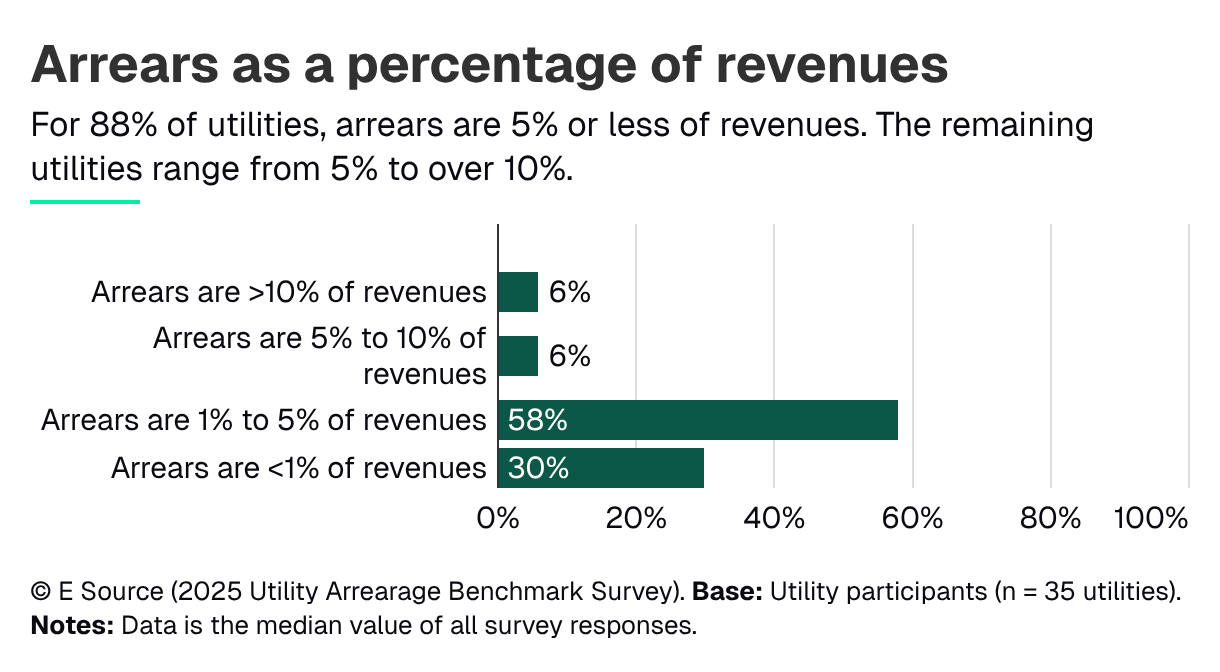
The factors that lead to arrearages are becoming more widespread. Our survey results showed the historic bad debt ratio is about 0.20% for electric utilities and slightly higher for gas utilities. Many utilities now report bad debt ratios two to three times higher than those historical levels. According to information from the Energy Hardship Project, the number of US households behind on their energy bills is expected to increase in 2026.
Utility customers are struggling to pay their bills
Customers are also experiencing financial pressure. The US Bureau of Labor Statistics and the Federal Reserve Bank of New York report that customers are facing rising prices and increasing debt, leading to risk of disconnection, the need to choose between paying utility bills and paying for other necessities, and added financial stress.
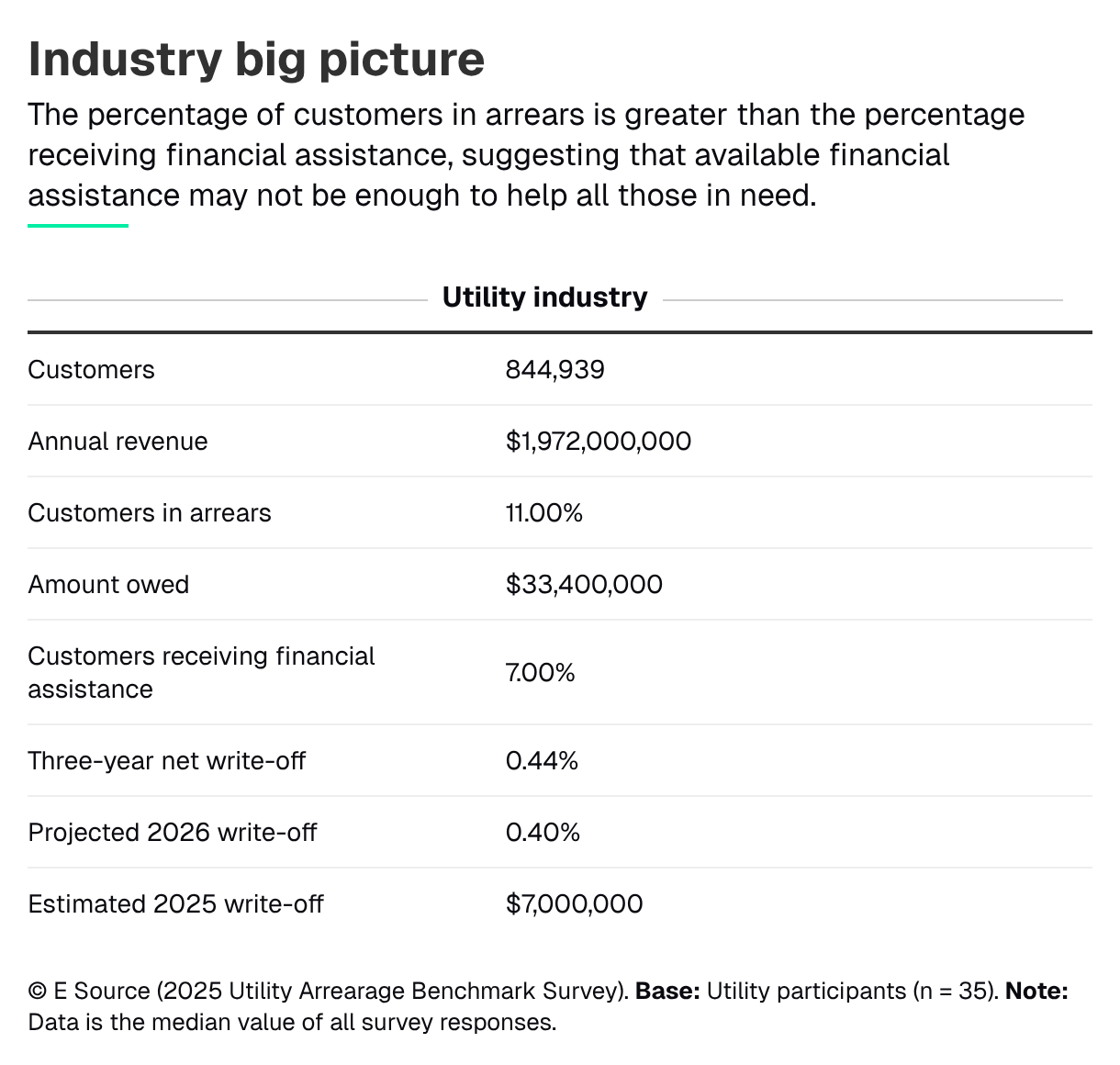
Within utilities, customer debt continues to climb, often accumulating for years before repayment. As a result, even when utilities provide programs to help, these efforts may not support all customers in need. The number of customers receiving financial assistance is smaller than the number of customers in arrears.
As with utilities, conditions for customers are getting worse. The National Energy Assistance Directors Association estimates that the cost of winter heating will be up 9.2% this winter, driven by rising costs. Yet assistance may not always be available to those who need it. In the US, federal energy assistance funding has been volatile. In 2025, for example, the Low Income Home Energy Assistance Program funding was delayed by the US federal government shutdown, as described in a recent article, As the Government Shutdown Freezes Low-Income Assistance Funds, PUCs Can Help, by RMI. In 2026, the Low Income Home Energy Assistance Program received a slight increase in funding. While public utility commissions can step in to support continued service, these efforts aren’t a permanent solution.
From the customer perspective, affordability is a major concern. According to the E Source report The top national drivers of utility customer satisfaction in 2025, affordability was the second-highest driver of customer satisfaction in 2025, up from third in 2024.
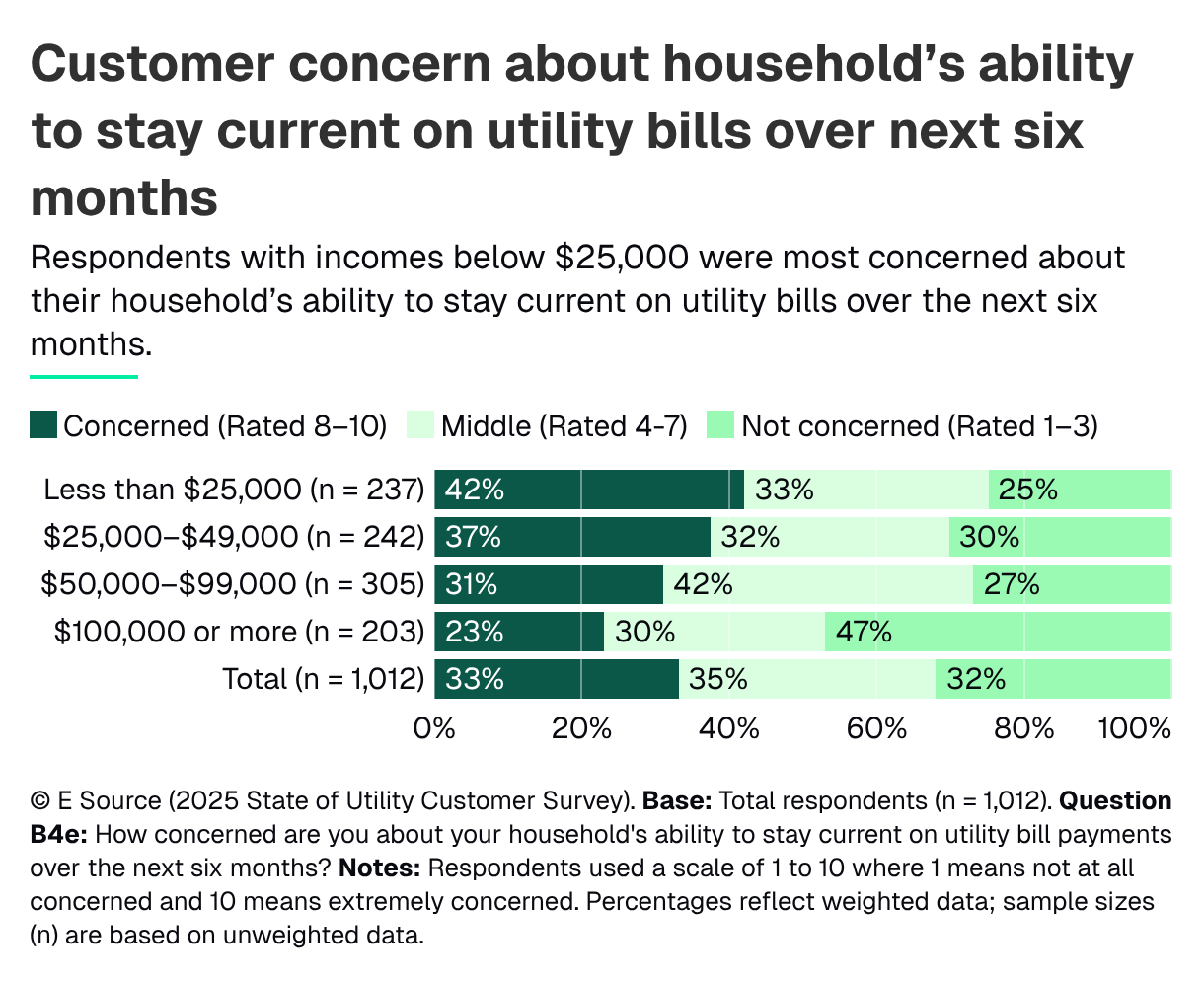
In our 2025 State of the Utility Customer survey, we asked customers how concerned they are about their household’s ability to stay current on utility bills over the next six months. Only 32% of respondents said they weren’t concerned, while 68% said they were moderately or very concerned.
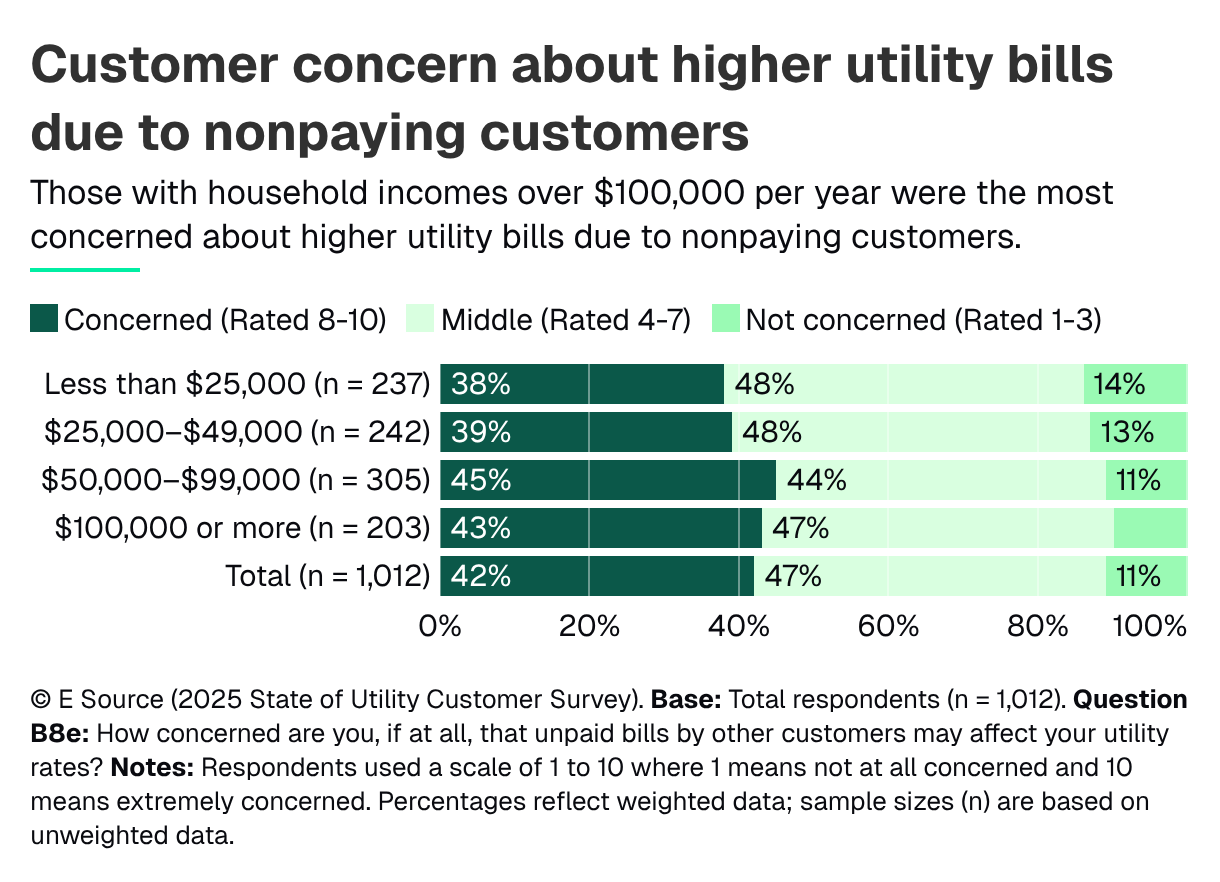
Even customers who are current on their utility bills may be concerned about unpaid bills. In the same State of the Utility Customer survey, we asked customers if they were concerned about higher bills due to nonpaying customers. Only 11% of respondents said they weren’t at all concerned, while 89% of respondents said they were moderately or very concerned.
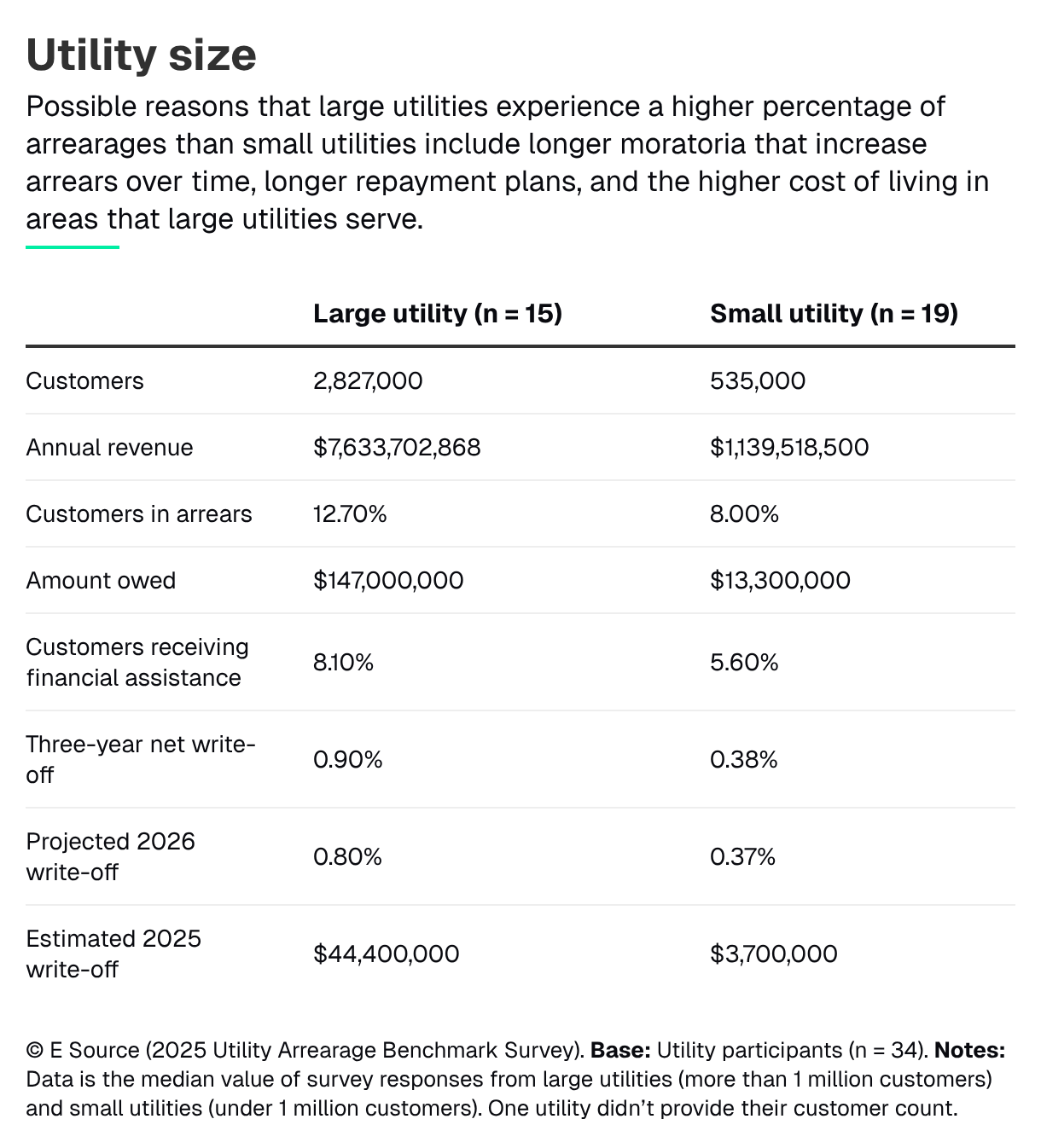
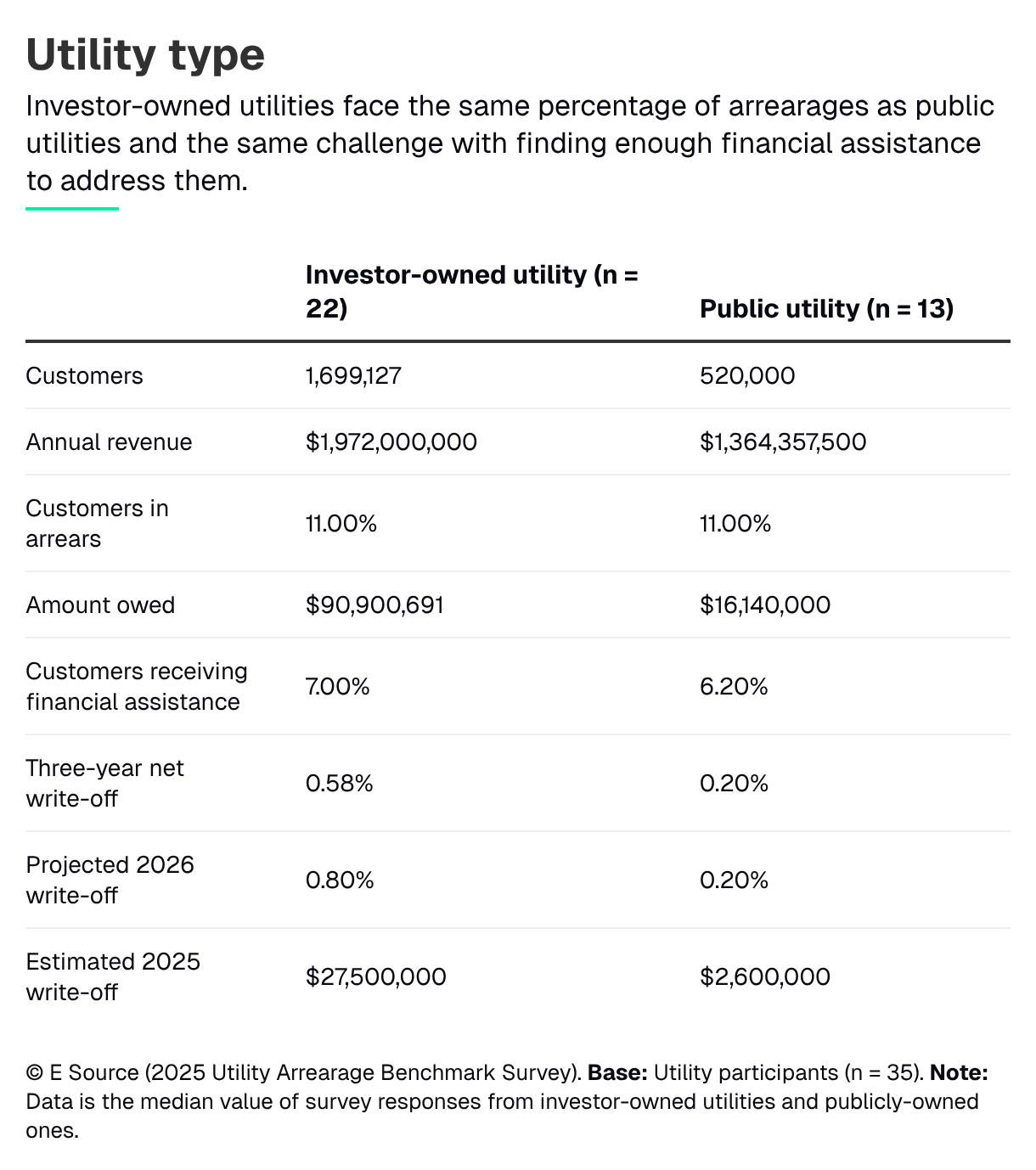
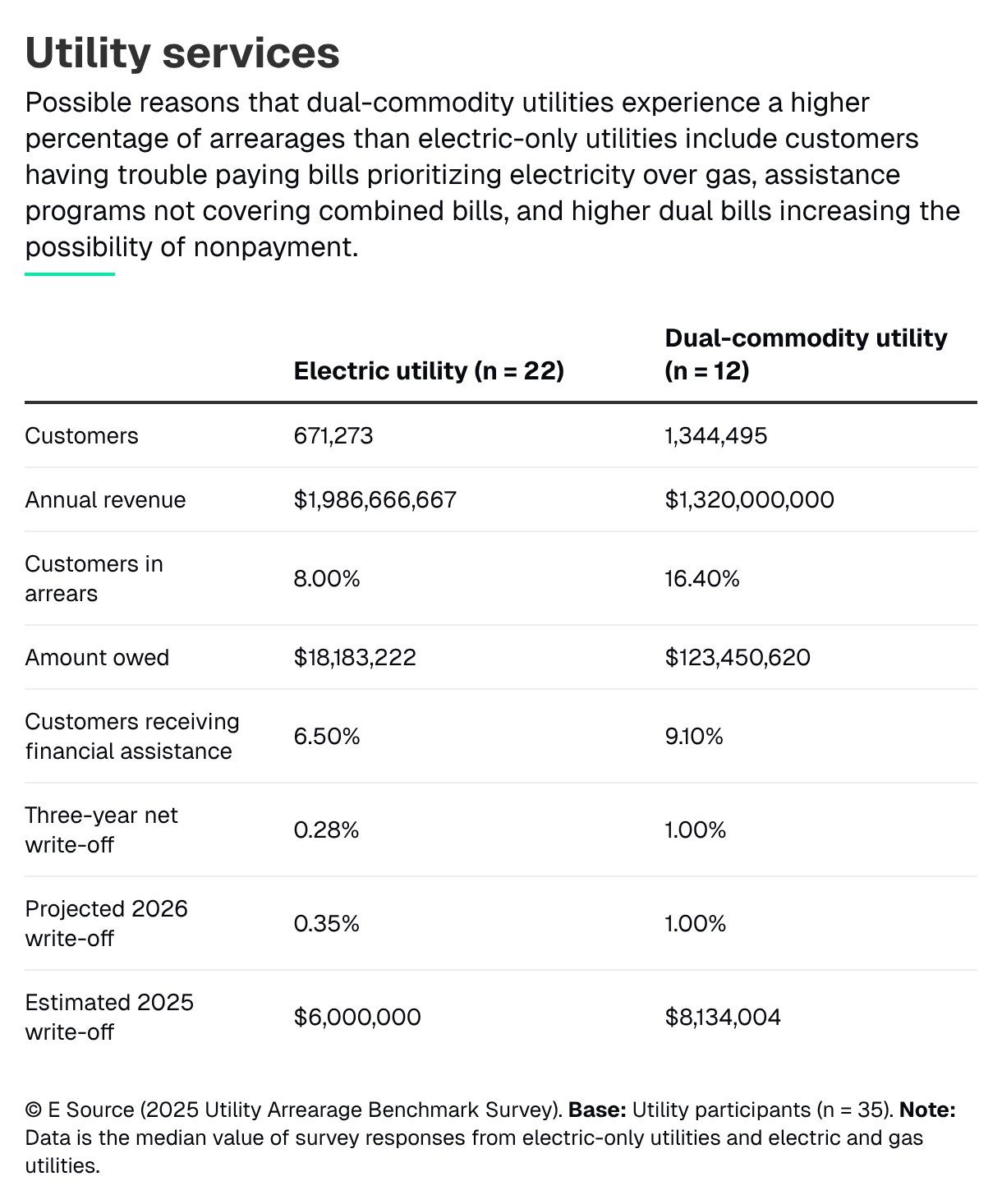
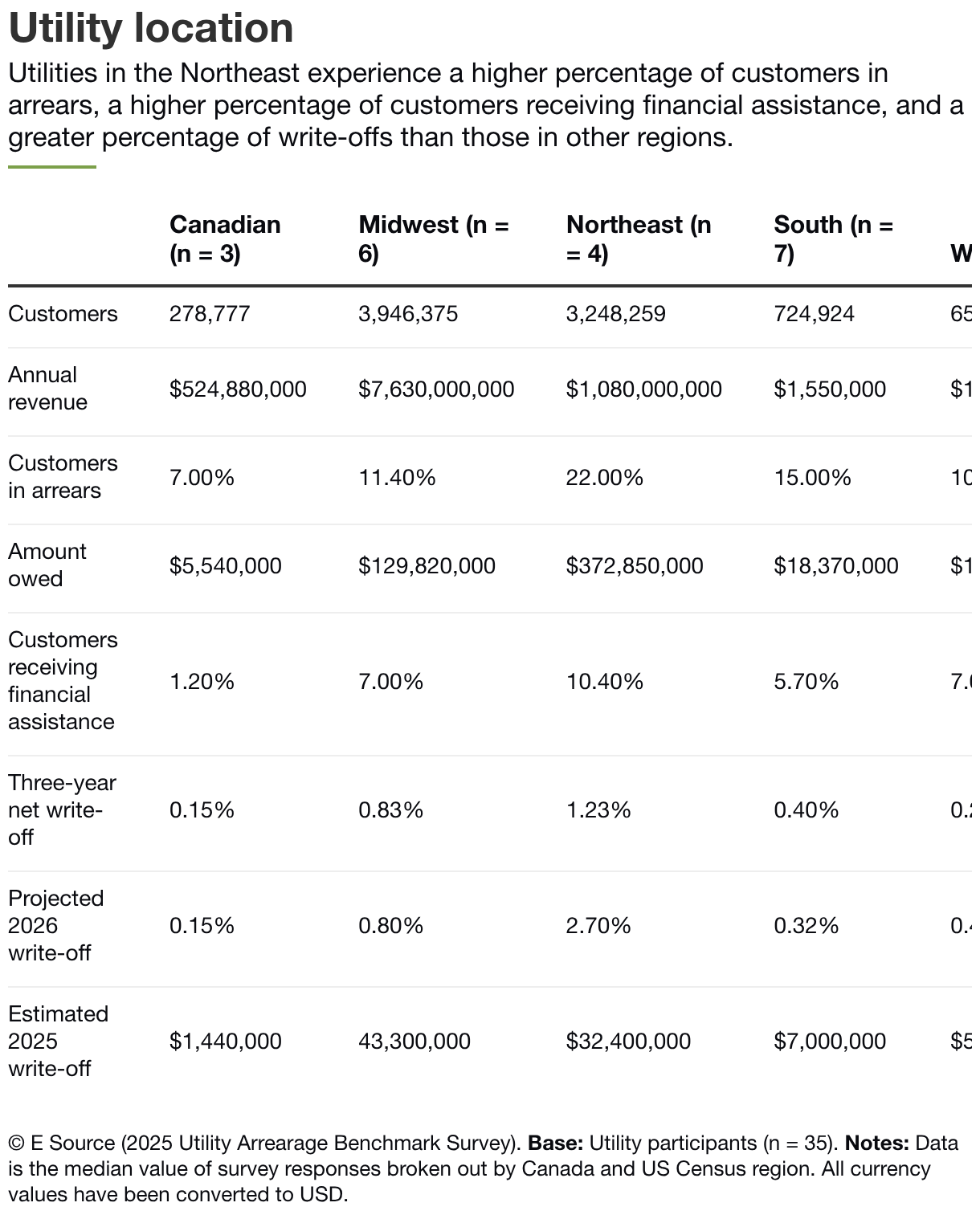
Attribute snapshots show where utilities stand
Utilities can compare their situation to the general results we see from our study. This exercise is a good starting point for determining next steps in addressing arrearages.
More resources on arrears
The following webinars may be helpful for companies struggling to manage arrearages.
Watch our webinar Managing the affordability crisis for more information about industry trends on affordability, alternative approaches to payment arrangements to manage arrears, and ways utilities have successfully used data science to limit and manage arrears.
Our webinar Improve credit and collections operations highlights information about industry trends for credit and collections, alternative approaches to arrears management programs, and how consumer debt has evolved after the pandemic.