Low- and moderate-income customer journey mapping: key findings from two E Source studies

Many households that struggle to pay their utility bills, often low- and moderate-income (LMI) are increasingly turning to utility energy assistance and demand-side management (DSM) offerings - such as home energy efficiency and weatherization upgrades - to provide immediate relief, reduce their energy use and costs, and provide health, safety, and wellbeing benefits.
The problem
The energy affordability crisis
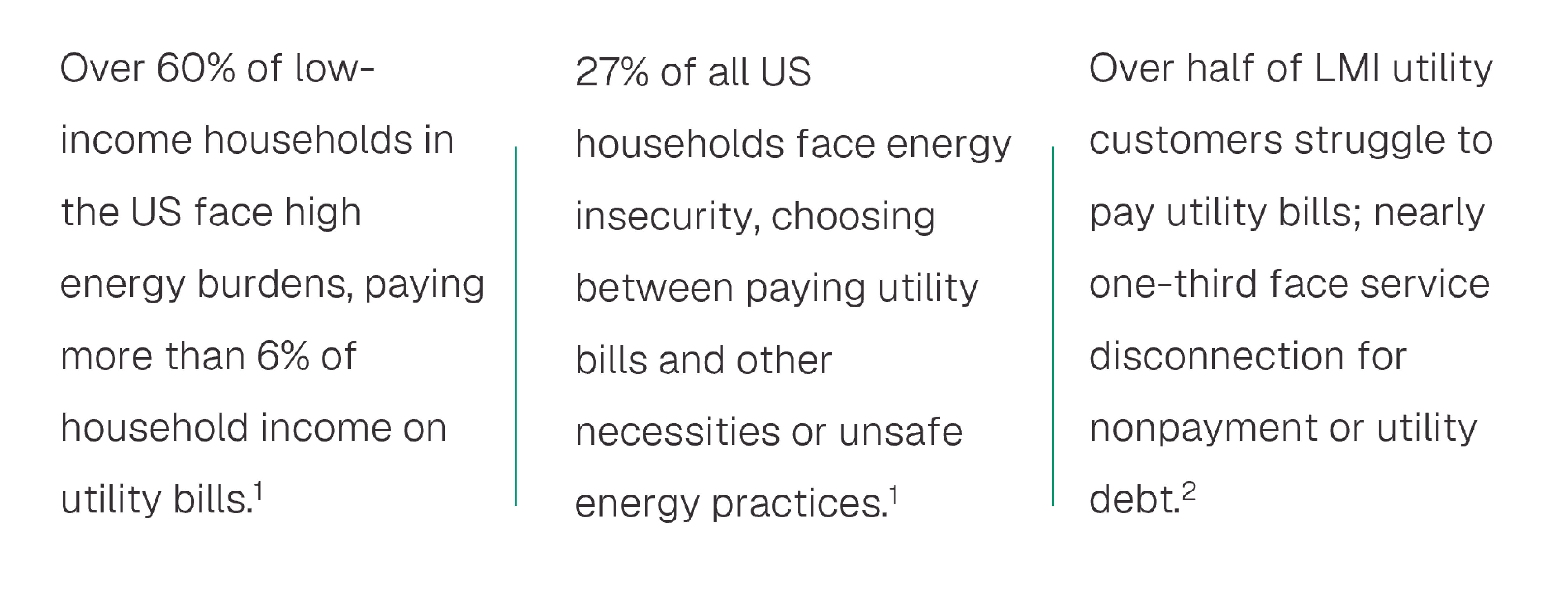
But seeking out and obtaining these critical offerings can be frustrating, time-consuming, and costly for customers, as well as for utilities and their local partners that administer and implement them. This may explain their lagging uptake with eligible households across the country.
Energy affordability solutions are lagging
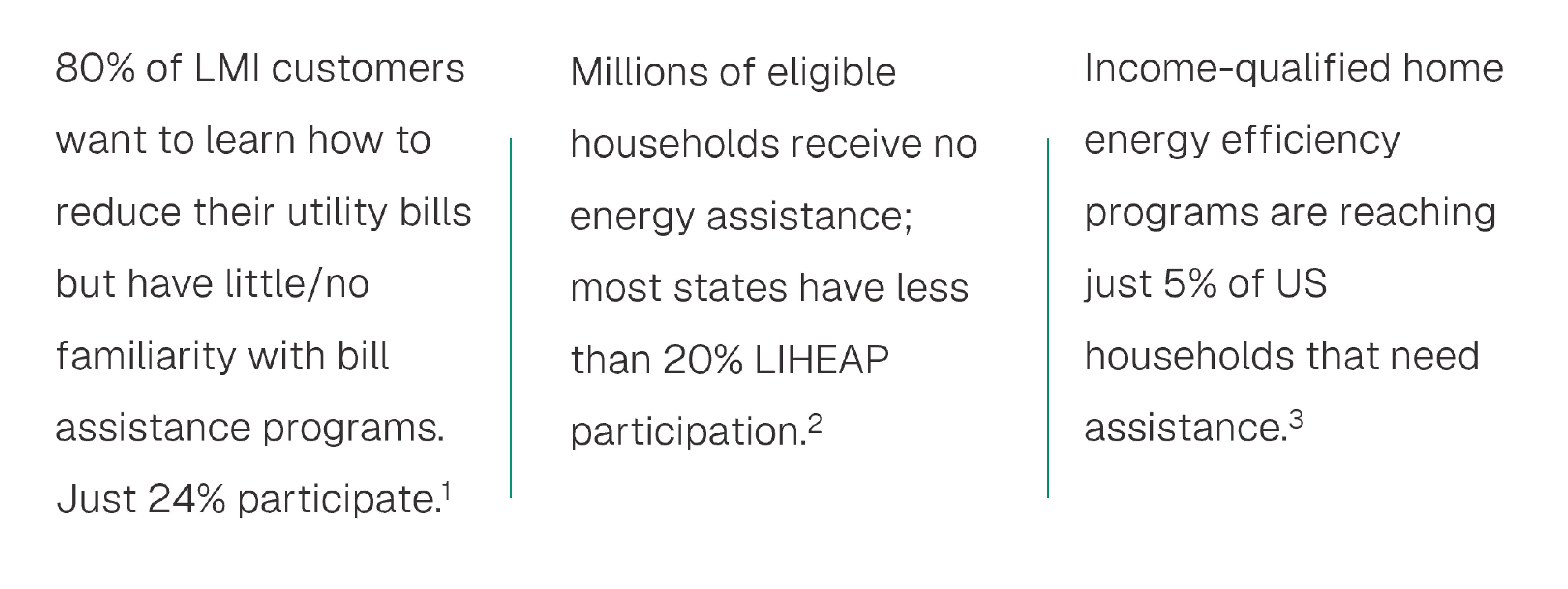
We believe there is a clear business case, regulatory driver, and customer service need to get this process right. To do that, we need to better understand the journey of LMI customers through these offerings: from need > application > enrollment > post-program engagement.
This is and should be a priority for all utilities. These income-qualified offerings:
- Help struggling households stay current and in service, and avoid disconnections and their associated risks to health, safety and wellbeing.
- Help manage all utility customers' rates, not just LMI households, by reducing the need for all customers to cover struggling customers' debt.
- Help drive down outstanding utility debt and financial risk, enabling utilities' operations and upgrades, which are critical to meeting resource adequacy constraints.
From October 2024 to December 2025, E Source worked with 25 investor-owned and municipal electric and gas utilities across the US on two comprehensive studies of LMI customer journeys through: 1) Energy Assistance and 2) Income-Qualified DSM programs.
These studies aimed to help utilities better understand and identify improvement opportunities for these LMI customer journeys, and deliver stronger outcomes for their customers, their staff and program performance, and local agency partners, third-party program implementers, and contractors.
The process
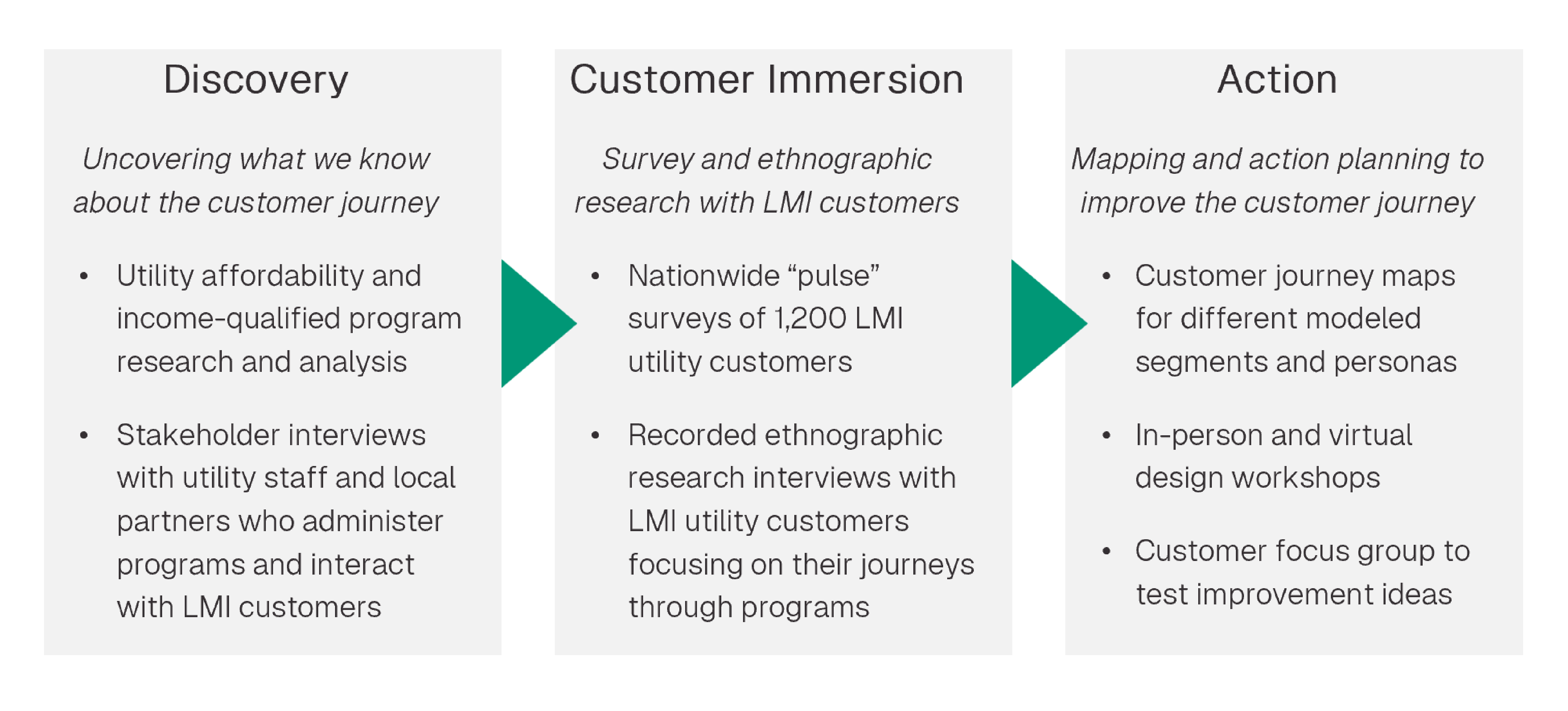
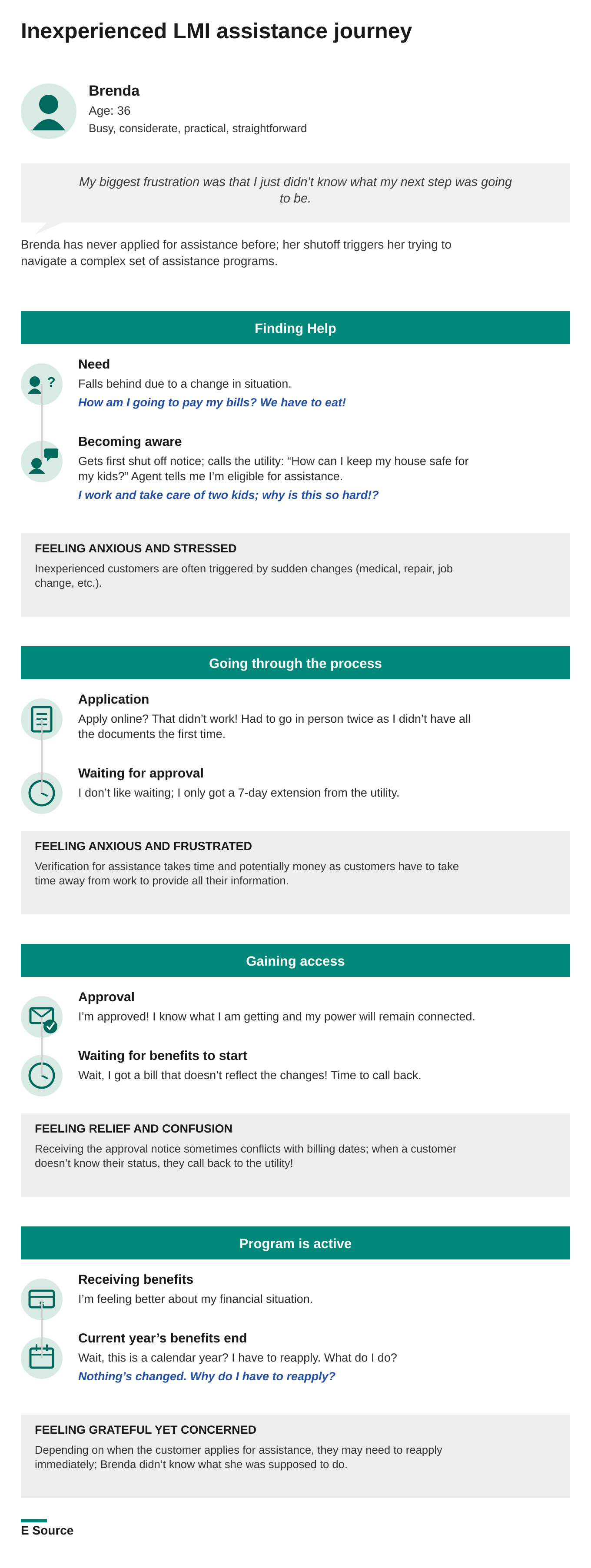
To better visualize the journey of LMI customers through the assistance process, we used customer journey mapping, which requires organizations to put themselves in their customers' shoes. Journey maps reveal the current state of the customer experience, and they can improve that experience and encourage wide-ranging changes in an organization. Journey mapping can help utilities:
- Identify small improvement ideas, as well as larger, more costly ones
- Promote customer-focused, cross-functional delivery of products and services
- Create a company-wide understanding of how a customer journey could and should look
- Provide visual, easily digestible stories to focus utility business cases for investments
What is customer journey mapping?
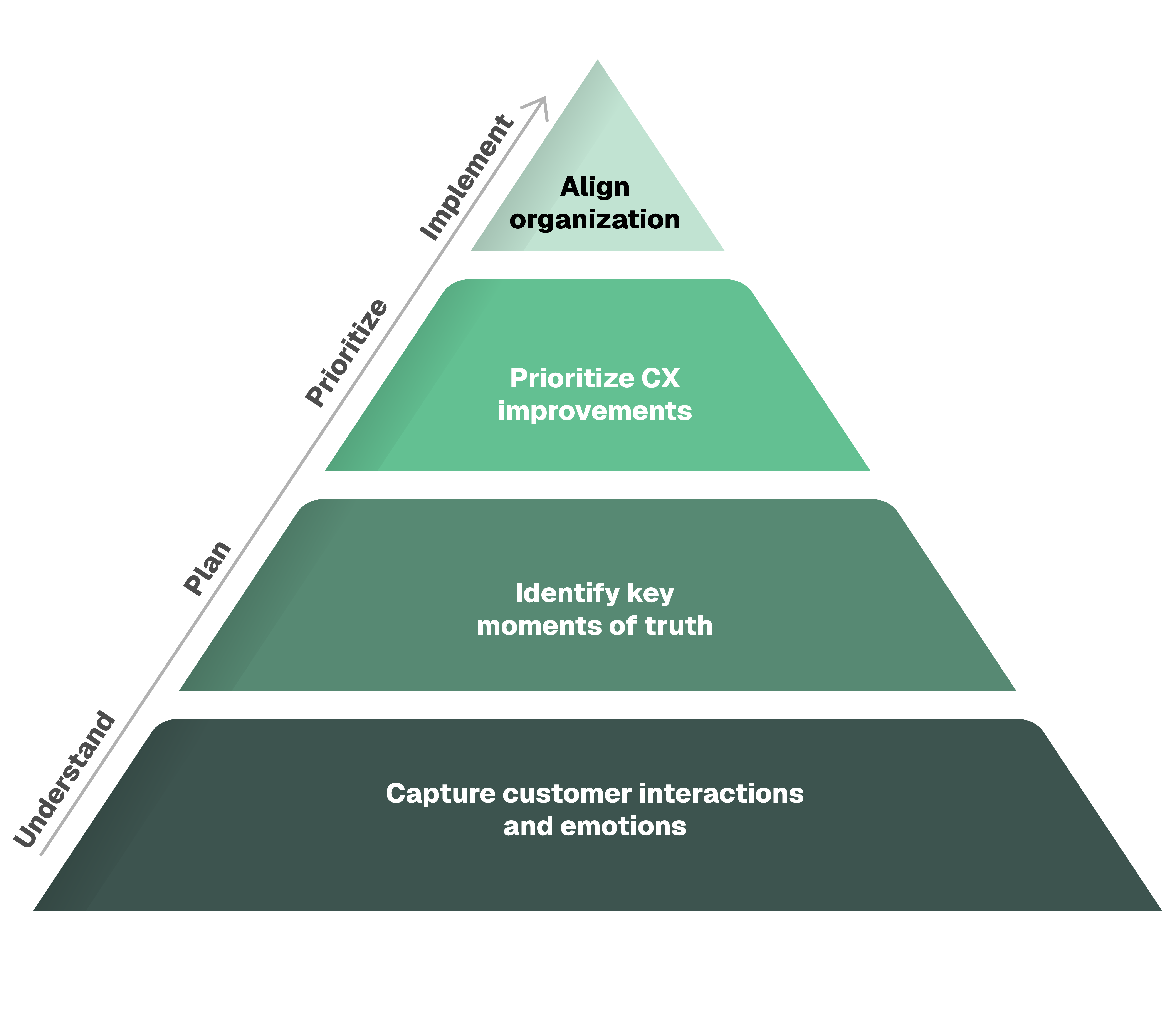
By synthesizing the studies' customer survey and interview research, we developed customer journey maps for modeled customer personas and segments. They detail the sequential phases and activities of the customer's journey, the sentiments they experience, and customer experience insights along the way.
Outcomes
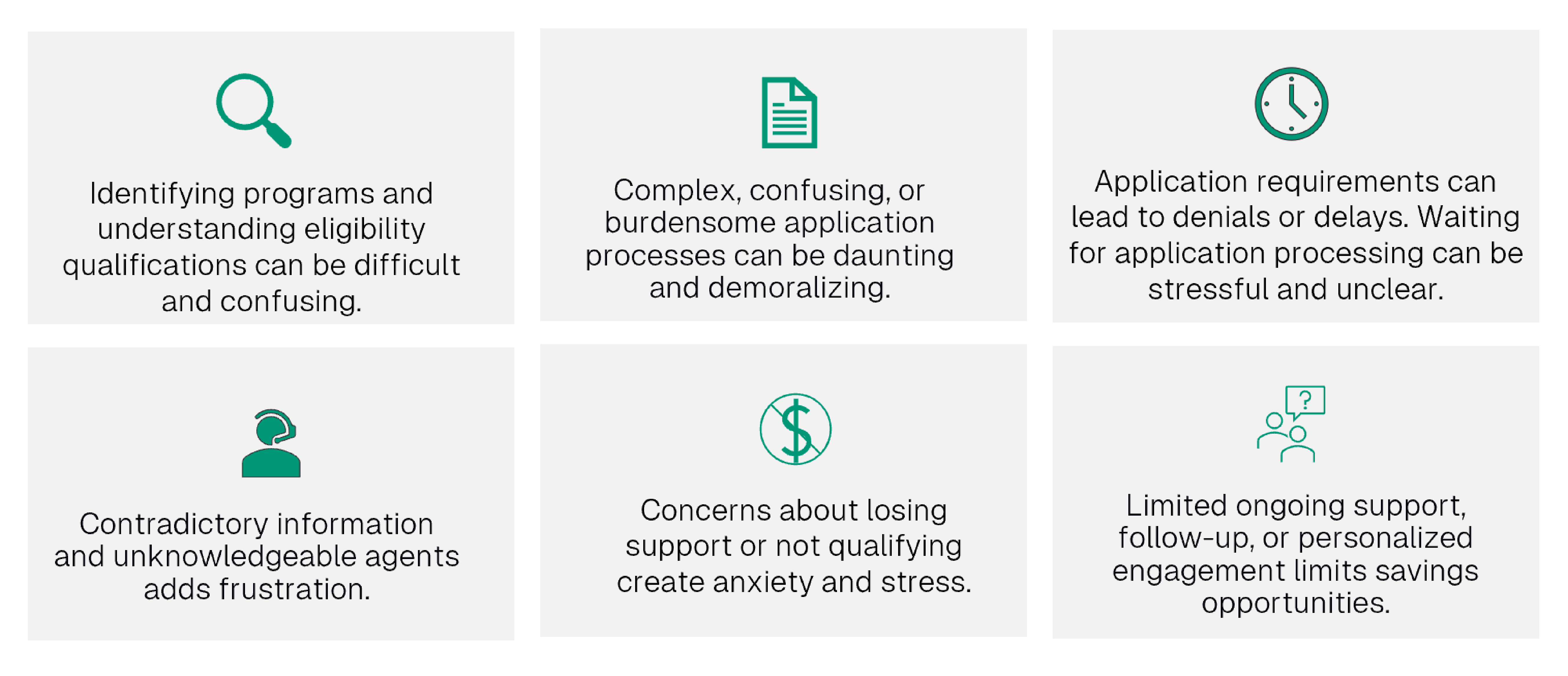
By analyzing study findings, customer journey maps, and design workshops with the participating utilities, we identified customer journey challenges and improvement considerations:
Customer journey challenges
Customer journey improvements
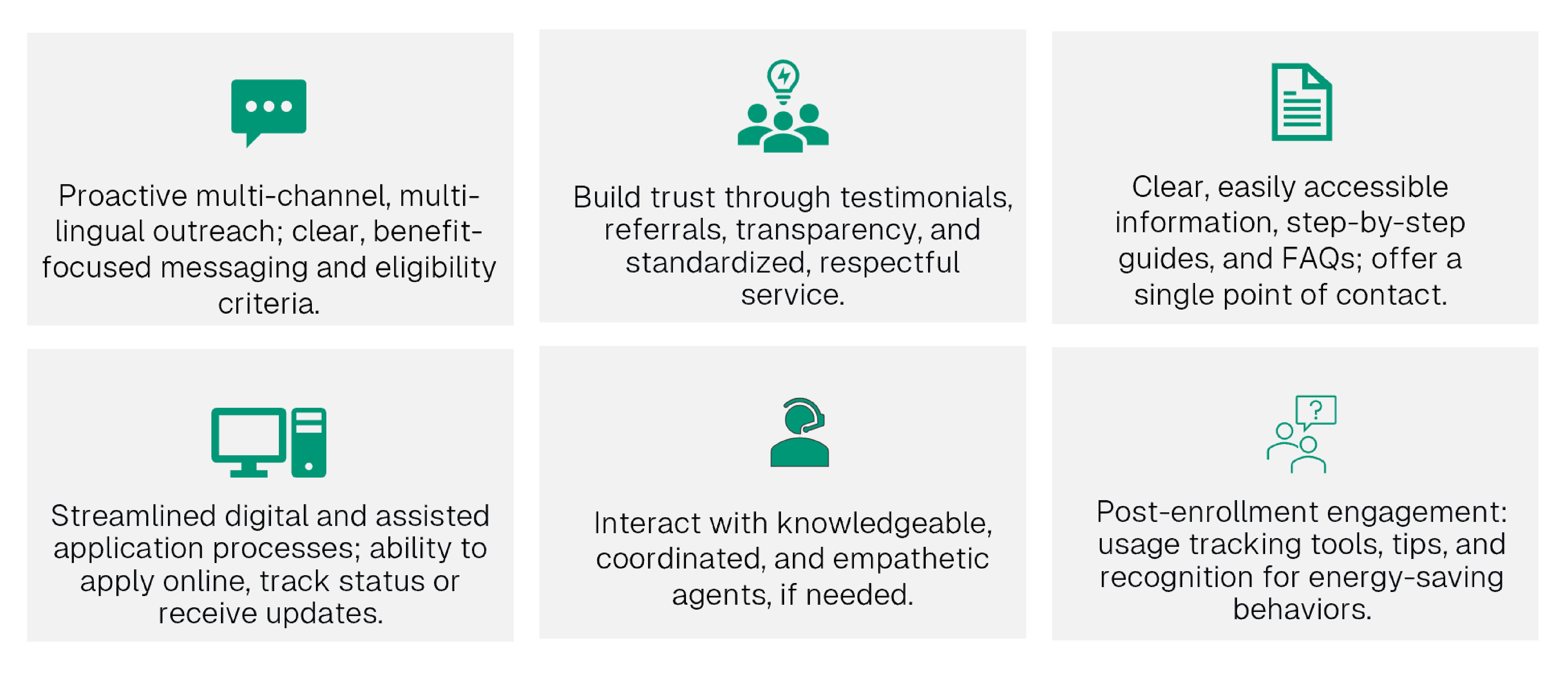
The studies produced a wealth of customer journey insights and actionable improvement recommendations. Participating utilities mentioned using the study's findings to inform changes to their energy assistance and weatherization programs' design and processes, including:
- Marketing and communications
- Customer engagement
- Contact center trainings
- Enrollment processes
- Applications